2 hr
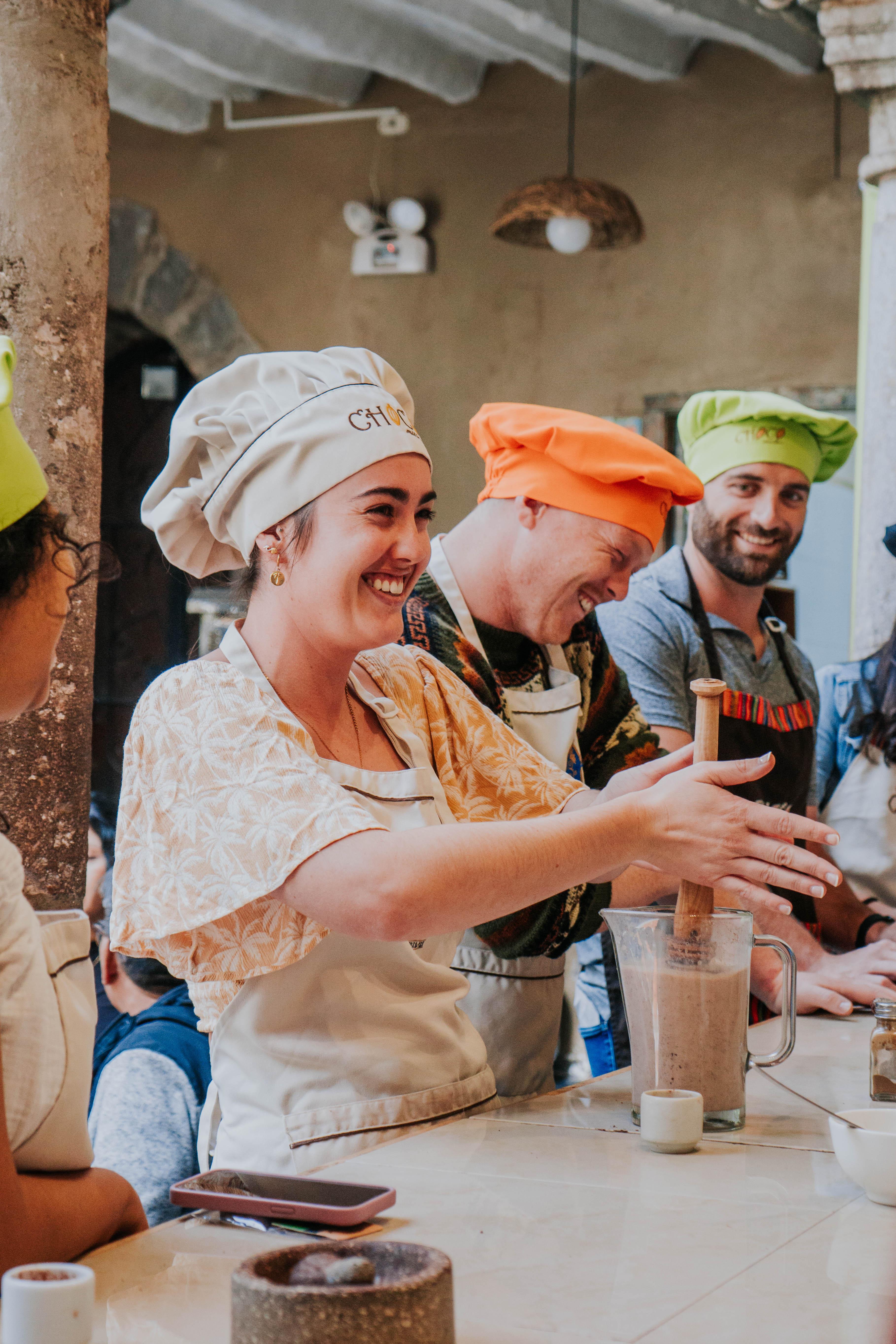
Interactive Chocolate Making Workshop at ChocoMuseo
Craft your own chocolate from bean to bar in this hands-on Cusco workshop with expert guidance
Reserve
Hand-picked by our editors — only the best 5 chocolate workshops from 12 reviewed
Verified partners for every tour, free cancellation where available, and instant confirmation on every booking.
2 hr
Craft your own chocolate from bean to bar in this hands-on Cusco workshop with expert guidance
Reserve
2 hr 30 min
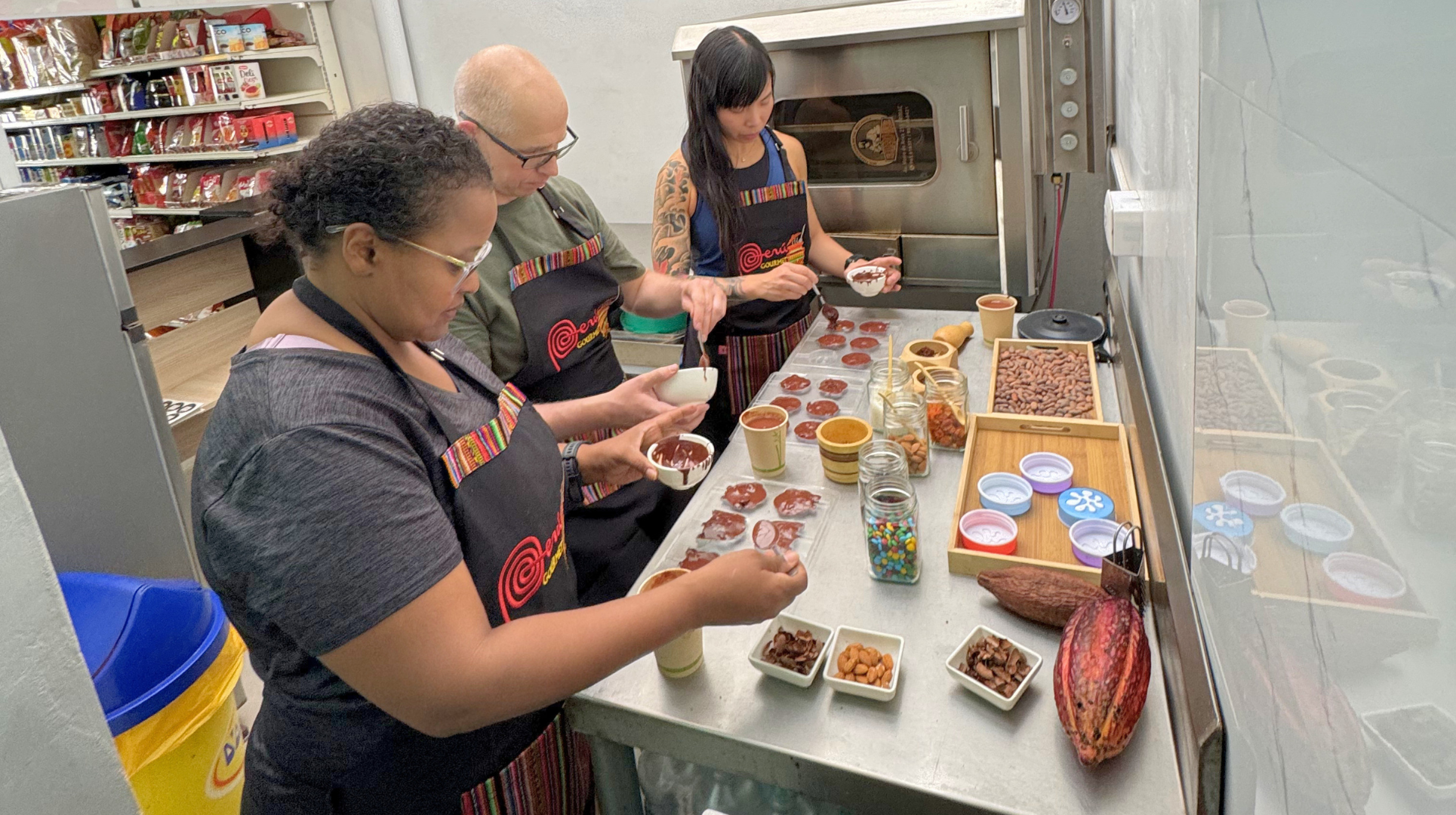
Craft authentic Belgian-style pralines and mendiants using award-winning organic cacao from Cusco's jungle
Reserve
2 hr
Create handmade chocolates with Andean cocoa and pair them with local craft beers in central Cusco
ReservePrices from verified partners. Availability updates in real time at checkout. Free cancellation policies apply where shown.
The landmarks, rooms, and views travelers on this tour remember — all visible on a single visit.
Learn to roast raw beans in a traditional manner to unlock the deep aromas.
Master the ancient Aztec technique of grinding nibs into smooth paste.
See how the modern melangeur machine refines your chocolate paste for texture.
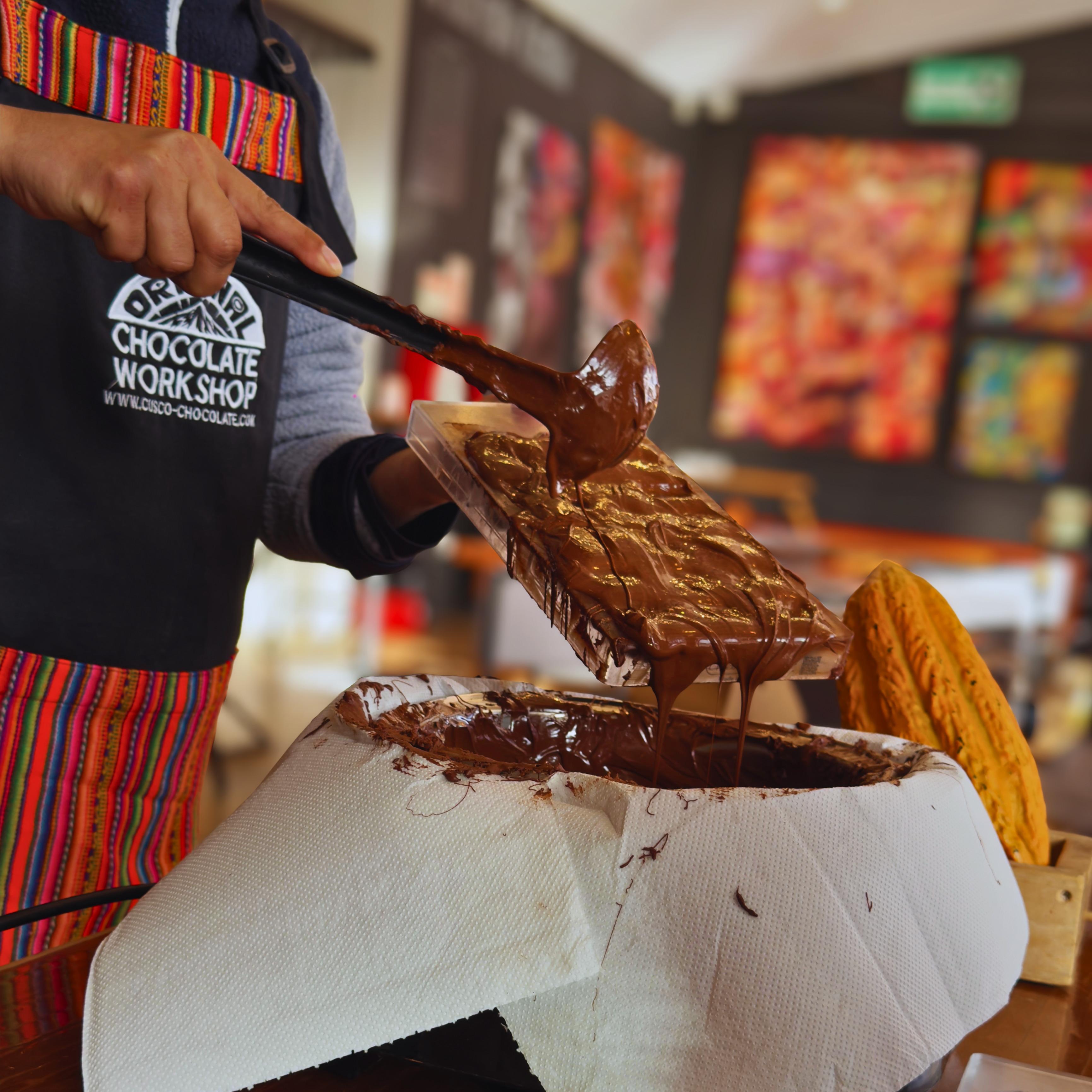
Create your own personalized bar with a variety of local toppings and spices.
Discover 5,000 years of history connecting Peruvian Amazon crops to the world.
These experiences serve different interests; ChocoMuseo offers an immersive bean-to-bar process, whereas cooking classes provide a broad exploration of Andean cuisine. Choosing the best chocolate workshop in Cusco depends on whether you prefer specialized confectionery mastery or a comprehensive culinary outing.
| Feature | Top pick ChocoMuseo Cusco | Cusco Cooking Class |
|---|---|---|
Primary Focus |
Cacao bean processing | Andean cuisine preparation |
Skill Level |
Beginner friendly | Beginner to intermediate |
Duration |
2 hours | 4–5 hours |
Take-home Product |
Handmade chocolate bars | Full multi-course meal |
Interaction with Ingredients |
Roasting and grinding cacao | Market shopping and cooking |
Activity Setting |
Indoor museum workshop | Professional kitchen and market |
| See tickets → |
Verdict: Select ChocoMuseo for a focused study of sweets, or choose the market-based tour for a complete lunch experience in one of the best chocolate workshop in cusco tour settings.
Choose your ticket, select your date, and reserve in under two minutes. Secure checkout handled by our verified partner.
Instant confirmation by email, with a mobile voucher you can save offline. No printing, no queuing at a collection desk.
Arrive at the entrance, show your voucher on your phone, and walk in. Most tickets include priority or skip-the-line access.
Practical details for your visit straight from our verified partners — hours, access, rules, and how to get there.
Calle Garcilaso 210, 2nd floor
Look for green and orange flags on the balconies.
The museum is centrally located near Plaza Regocijo and is easily reachable on foot from most city center hotels.
Request a taxi to Calle Garcilaso; ensure the driver drops you at the Plaza Regocijo entrance.
Casual attire is recommended. Wear comfortable walking shoes for exploring the Cusco city center.
Small personal bags are permitted. Large luggage is not suitable for the workshop space.
Photography is encouraged throughout the museum and during the best chocolate workshop in cusco.
The museum is wheelchair accessible. Staff are available to assist with navigating the 2nd-floor layout.
The best chocolate workshop in cusco offers kid-friendly sessions. Recommended for children aged 5 and up.
Complimentary tastings of chocolate and cacao-based drinks are included. A cafeteria is available on-site.
Workshops may be booked in advance to guarantee participation. ChocoMuseo Cusco provides aprons and all necessary tools.
Calle Garcilaso 210, 2nd floor
Look for green and orange flags on the balconies.
Get directionsBest time to go, insider tips, nearby landmarks, and the cancellation fine print — flip through to skim what matters to you.
How crowds, weather, and events shift across the year.
Mild weather and fewer crowds make this ideal for visiting the best chocolate workshop in cusco.
Peak tourist season with sunny days; book your best chocolate workshop in cusco tour early.
September offers pleasant temperatures and clear views of the Cusco historical center.
Dry season with cool evenings, perfect for warm hot chocolate tastings at the museum.
Small details that turn a good visit into a great one.
Reserve your spot for the best chocolate workshop in cusco online during the high season.
Allow yourself a day to acclimate to the high altitude before participating in active workshops.
Visit mid-morning to experience the best chocolate workshop in cusco with fewer crowds.
Do not miss the complimentary cacao tea and liquor samples available at the entrance.
Remember that your handmade chocolate requires 45 minutes to set before collection.
Check for combined city tours that include the best chocolate workshop in cusco tickets.
Non-bookable sights within a short walk — free to visit, easy to pair.
The historic heart of the city featuring colonial architecture and vibrant local life.
An impressive religious landmark housing colonial-era art and historical artifacts.
Massive ancient stone fortress overlooking the city of Cusco.
A charming neighborhood known for its artisan workshops and narrow streets.
Flexible, no hidden fees.
Cancel up to 24 hours in advance for a full refund. Entrance to the museum remains 0 PEN.
Hand-picked options within walking distance — pick a district for vibe, or a specific hotel for convenience.
High-end stay near the main square.
Convenient location for visiting historical sites.
Bohemian neighborhood with various boutique guesthouses.
Theobroma cacao grew wild in Peru's Amazonian valleys two millennia before European contact, cultivated first by pre-Inca cultures who ground the beans into ceremonial beverages seasoned with chili and annatto. The Chuncho variety — native to the Cusco region and prized today for its floral, fruity profile — remained largely unknown outside Peru until the 21st century revival of heirloom cacao genetics. ChocoMuseo opened its Plaza Regocijo location in 2007 with a singular mission: return chocolate production to its artisan roots and educate visitors on Peru's role as custodian of some of the world's most genetically diverse cacao. The museum occupies the second floor of a colonial building overlooking the plaza, its wooden balconies and exposed stonework typical of Cusco's Spanish-era architecture. Inside, glass cases display cacao pods from six Peruvian regions, fermentation boxes, and antique grinding stones. Interpretive panels trace the journey from Maya drinking chocolate to Swiss milk chocolate, but the institution's true identity lies in its working kitchen. Here, the best chocolate workshop in Cusco experiences unfold daily: participants roast Chuncho beans over gas burners, crack shells by hand, and winnow nibs in woven baskets, replicating methods still used in small Amazonian cooperatives. Each session follows the bean-to-bar process without shortcuts. Visitors grind nibs on volcanic stone metates, the same tool used by ancient Mesoamerican cultures, feeling the paste transition from gritty to smooth as cocoa butter releases. They temper chocolate on marble slabs, learning to read the gloss and snap that signal proper crystallization. The curriculum includes truffle rolling, bark casting, and flavor pairing with Andean ingredients: lucuma, purple corn, pink salt from Maras. Instructors explain Fair Trade certification, the economics of cacao farming, and why Peruvian chocolate commands premium prices in European markets. ChocoMuseo sources beans directly from cooperatives in the Quillabamba and Satipo valleys, paying above Fair Trade minimums and maintaining traceability to individual farms. The workshops double as quality control: master chocolatiers test new harvests alongside students, adjusting roast profiles and conche times in real time. This transparency distinguishes the institution from commercial chocolate tourism. Participants leave with bars they molded themselves, recipes for Peruvian hot chocolate, and a working knowledge of fermentation biochemistry. The model has proven replicable — ChocoMuseo now operates locations in Lima, Ollantaytambo, and Miraflores — but the Cusco flagship remains the reference point for serious cacao education in the Andes.
"Chuncho cacao remained largely unknown outside Peru until the 21st century revival of heirloom genetics."
A step-by-step walkthrough of the visit — what you'll see, how long each stage takes, and the details that matter.
You climb the wooden staircase from Plaza Regocijo at 09:30, entering a workshop space where twenty kilos of roasted Chuncho beans sit in woven baskets. Your instructor — a Cusqueña chocolatier trained in Belgium — hands you a pod the size of a rugby ball, its ridged yellow shell concealing forty purple seeds embedded in white mucilage. You crack it open with a mallet, scrape the pulp with your fingers, taste the tart sweetness that fermentation will transform into chocolate. The roasting station comes next. You spread two hundred grams of fermented beans across a mesh screen, shaking them over a low flame until the skins blister and the room fills with the scent of roasted nuts. Cracking and winnowing follow: you press each bean between your palms, let the papery husks blow away, collect the nibs in a ceramic bowl. The stone grinder runs for fifteen minutes, your nibs liquefying into a glossy paste as friction generates heat and releases cocoa butter. You temper the mass on a marble slab, folding and spreading until the chocolate reaches 31 degrees Celsius, then pour it into silicone molds shaped like cacao pods. While your bars set, you roll truffles with lucuma powder and coat them in crushed pink salt from Maras. The final step is tasting: you sample bars made from six Peruvian origins, learning to distinguish the citrus notes of Piura from the earthy undertones of Satipo. You leave at noon with four bars, a recipe booklet, and cocoa nibs for brewing traditional Peruvian hot chocolate.
ChocoMuseo Cusco is open daily from 09:00–19:00.
Yes, entrance to the museum is 0 PEN.
The signature bean-to-bar session typically lasts about 2 hours.
Yes, children aged 5 and up are encouraged to join the kid-friendly versions of our best chocolate workshop in cusco.
The best time is between 09:00 and 18:00 to avoid peak crowds and ensure you have time for your activity.
Booking your best chocolate workshop in cusco tickets in advance is recommended, especially during the high season.
Yes, photography is allowed and encouraged at the ChocoMuseo Cusco.
Bring a camera and comfortable clothing for the best chocolate workshop in cusco experience.
Yes, the ingredients used in the best chocolate workshop in cusco can be customized to your preference.